Why Does My Furnace Keep Short Cycling? Troubleshooting Tips from the Experts
There is nothing quite as frustrating as sitting in your living room during a Colorado Springs cold snap and hearing your furnace click on, run for three minutes, and then abruptly shut off—only to do the exact same thing ten minutes later.
In the HVAC world, we call this short cycling.
At Affordable Plumbing, Heat & Electrical, we see this issue frequently. Short cycling isn’t just annoying; it’s a sign that your furnace is struggling. It puts massive wear and tear on your blower motor, spikes your energy bills, and prevents your home from ever reaching a truly comfortable temperature.
If your furnace is "stuttering," here is a guide to why it’s happening and what you can do about it.
What Exactly is Short Cycling?
A normal heating cycle should last long enough to bring your entire home up to the temperature set on your thermostat—usually 10 to 15 minutes. Short cycling occurs when the furnace shuts down prematurely, often before the house is warm, because a safety sensor has triggered a shutdown.
1. The Most Likely Culprit: A Dirty Air Filter
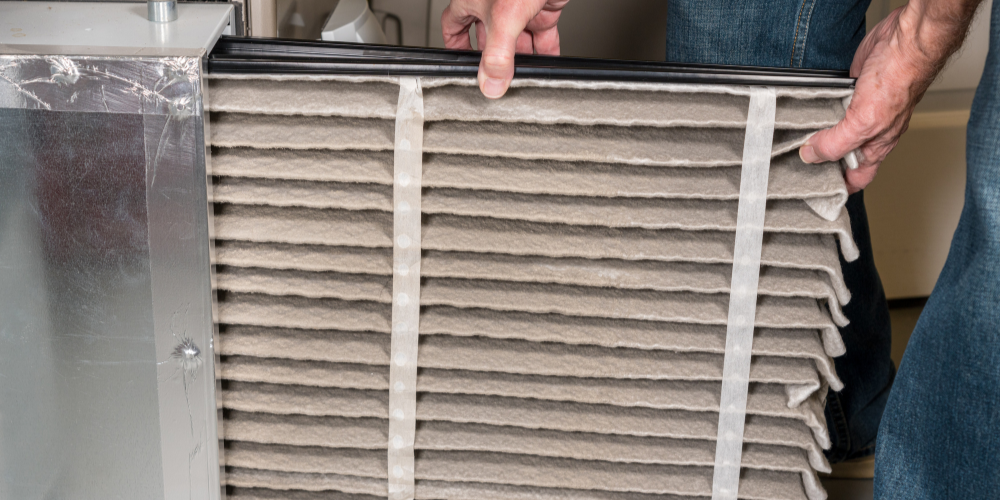
We mention this in almost every blog post because it is the root of so many problems. If your air filter is clogged with dust and pet dander, your furnace cannot "breathe."
The Problem: Without enough cool air flowing into the system, the heat exchanger inside your furnace will quickly overheat.
The Result: To prevent a fire or a cracked heat exchanger, a safety device called the limit switch shuts the furnace down. Once the system cools off, it tries to start again, and the cycle repeats.
The Fix: Check your filter. If it looks like a gray wool blanket, replace it immediately.
2. Thermostat Issues
Sometimes the furnace is fine, but the "brain" (the thermostat) is getting bad information.
Location Matters: If your thermostat is located right next to a heat vent, in direct sunlight, or near a hot appliance like an oven, it will think the house is warm much sooner than it actually is. It tells the furnace to shut off, only to realize a few minutes later that the rest of the house is still $55^\circ \text{F}$.
Low Batteries: A thermostat with dying batteries can send erratic signals to your HVAC system, causing it to start and stop unexpectedly.
The Fix: Ensure your thermostat is on an interior wall away from heat sources and replace the batteries if they haven't been changed in a year.
3. A Dirty Flame Sensor
This is a very common technical issue that we see during our annual tune-ups. The flame sensor is a small metal rod that confirms a flame is present when the gas is turned on.
The Problem: Over time, this rod can get coated in carbon buildup or dust. If the sensor can't "see" the flame because of the grime, it will shut off the gas as a safety precaution to prevent a gas leak.
The Result: The furnace starts, the burners ignite for a few seconds, and then it immediately shuts down.
The Fix: This requires a professional to carefully clean or replace the sensor. It’s a quick fix for a technician but difficult for a homeowner to do safely.
4. Blocked Exhaust Vents
Your furnace needs to breathe "out" just as much as it needs to breathe "in." High-efficiency furnaces vent through PVC pipes that lead outside your home.
The Problem: In Colorado Springs, it’s not uncommon for snow, ice, bird nests, or even autumn leaves to block these exit pipes. If the exhaust can't escape, the pressure switch will shut the system down to prevent carbon monoxide from backing up into your home.
The Fix: Take a walk around the exterior of your house and make sure your furnace vents are clear of snow drifts or debris.
5. An Oversized Furnace
This is a "hidden" problem that usually shows up in newer homes or after a recent installation. Some people think "bigger is better" when it comes to furnaces, but that isn't true.
The Problem: If your furnace is too powerful for the size of your home, it will blast the house with heat so quickly that the thermostat is satisfied in minutes.
The Result: This constant on-and-off cycling is incredibly inefficient and will significantly shorten the lifespan of the unit.
The Fix: Unfortunately, the only fix for an oversized unit is a proper load calculation and replacement by a qualified HVAC professional.
When to Call Affordable Plumbing, Heat & Electrical
If you’ve changed your filter and checked your thermostat but the short cycling continues, it’s time to call in the experts.
Ignoring short cycling is like driving your car with the check engine light on—eventually, a small, cheap repair will turn into a major, expensive replacement. Our team can quickly diagnose the issue, whether it’s a faulty limit switch, a grimy flame sensor, or an airflow problem.
Is your furnace acting up? Contact us today, and let’s get your home back to a steady, reliable warmth!